
 EN
EN
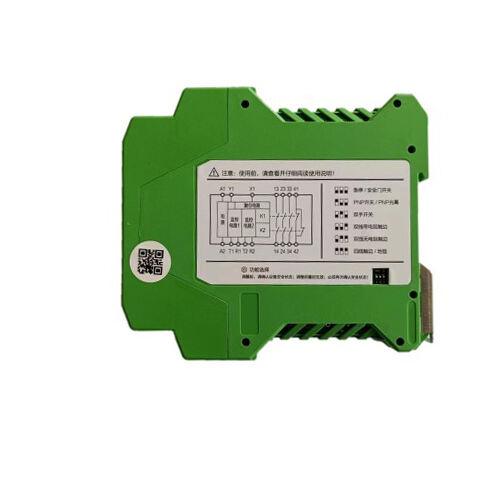
In modern industrial environments, protecting personnel and equipment from hazardous machinery is paramount to operational success and regulatory compliance. Safety systems form the backbone of manufacturing operations, with safety relays serving as critical components that monitor and control potentially dangerous processes. These specialized devices ensure that equipment operates within safe parameters while maintaining the ability to immediately halt operations when safety conditions are compromised. Understanding the key features and selection criteria for industrial safety relay systems is essential for engineers and safety professionals who need to implement robust protection mechanisms in their facilities.
Understanding Safety Relay Technology and Applications
Fundamental Operating Principles
Safety relay technology operates on the principle of forced-guided contacts, which ensure that when normally closed contacts open, normally open contacts cannot close simultaneously. This mechanical design prevents dangerous failure modes where safety circuits might inadvertently energize hazardous equipment. The internal architecture typically includes multiple redundant contact sets that monitor each other's status, creating a fail-safe mechanism that defaults to the safe state when any component experiences failure or degradation.
Modern safety relay systems incorporate sophisticated monitoring capabilities that extend beyond simple contact verification. These devices continuously assess input signal quality, response times, and internal component health to maintain optimal safety performance. When integrated with programmable safety controllers, they form comprehensive safety networks capable of managing complex industrial processes while maintaining the highest levels of personnel protection.
Industrial Application Scenarios
Manufacturing environments utilize safety relay systems across diverse applications ranging from emergency stops and light curtains to two-hand control stations and safety mats. In automated production lines, these devices interface with robotic systems to ensure immediate shutdown capabilities when workers enter hazardous zones. The versatility of safety relay technology allows for customized configurations that address specific operational requirements while maintaining compliance with international safety standards.
Heavy industry sectors such as steel production, chemical processing, and automotive manufacturing depend on safety relay systems to protect against catastrophic equipment failures and personnel injuries. These applications often involve high-energy processes where millisecond response times can prevent serious accidents and equipment damage. The reliability and proven performance of safety relay technology make it indispensable for critical safety functions in these demanding environments.
Essential Technical Specifications for Industrial Applications
Safety Rating Categories and Performance Levels
Safety relay selection begins with understanding the required safety integrity level for the specific application. Categories range from Category 1 through Category 4, with each level defining increasingly stringent requirements for fault tolerance and diagnostic coverage. Category 4 systems demand the highest level of safety performance, requiring dual-channel architectures with comprehensive cross-monitoring and diagnostic capabilities that detect and respond to both single faults and common cause failures.
Performance Level ratings complement safety categories by quantifying the probability of dangerous failures per hour of operation. PLe represents the highest performance level, requiring sophisticated safety architectures that achieve failure rates below 10^-8 dangerous failures per hour. Understanding these specifications ensures that the selected safety relay meets the risk assessment requirements for the intended application while providing appropriate protection levels for personnel and equipment.
Input and Output Configuration Requirements
Input configuration flexibility determines how effectively a safety relay can interface with existing safety devices and sensors. Modern units support various input types including normally open, normally closed, and test pulse inputs that accommodate different safety device technologies. The number of available inputs directly impacts system expandability and the complexity of safety functions that can be implemented within a single device.
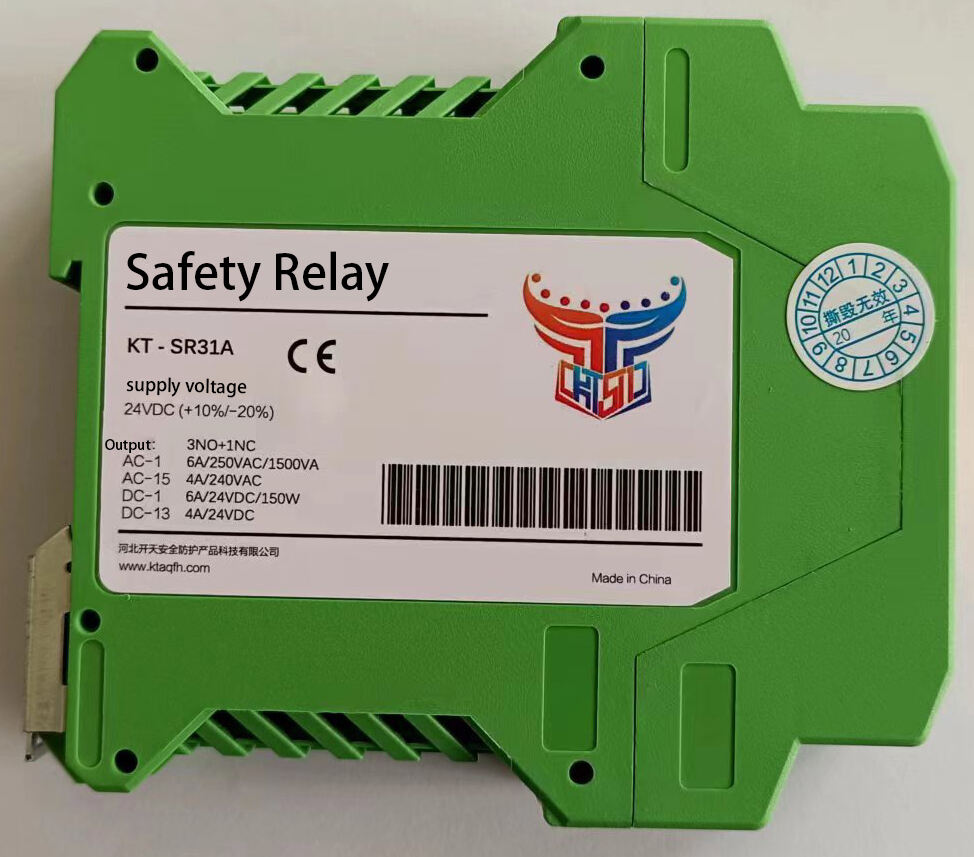
Output specifications must align with the controlled equipment requirements, considering both switching capacity and contact configuration. Safety relay outputs typically provide both normally open and normally closed contacts to enable fail-safe operation of downstream equipment. The current and voltage ratings must exceed the demands of connected loads while providing adequate safety margins for reliable long-term operation in industrial environments.
Advanced Features for Modern Industrial Environments
Diagnostic and Monitoring Capabilities
Contemporary safety relay systems incorporate comprehensive diagnostic functions that continuously monitor internal components, input circuits, and connected safety devices. These capabilities include contact welding detection, input signal quality assessment, and response time verification that ensure optimal safety performance throughout the device lifecycle. Advanced diagnostic features can identify developing problems before they compromise safety functionality, enabling predictive maintenance strategies that minimize downtime.
Real-time monitoring extends to external safety device health assessment, where the safety relay can detect degraded performance in connected sensors, switches, and actuators. This proactive approach to safety system maintenance helps prevent unexpected failures and ensures that safety functions remain effective as equipment ages. The diagnostic information can be communicated to higher-level control systems for integration with plant-wide maintenance management programs.
Communication and Integration Options
Modern industrial networks require safety relay systems that can seamlessly integrate with existing automation infrastructure while maintaining safety integrity. Safety-rated communication protocols such as PROFIsafe, DeviceNet Safety, and Ethernet/IP CIP Safety enable distributed safety architectures that provide flexibility without compromising protection levels. These communication capabilities allow for centralized safety monitoring and coordination across multiple production areas.
Integration with human-machine interfaces enables operators to monitor safety system status and receive immediate notification of safety-related events. This visibility improves operational efficiency by reducing the time required to identify and resolve safety system issues. The ability to access diagnostic information and system status remotely supports modern maintenance practices and reduces the need for physical inspections in hazardous areas.
Installation Considerations and Environmental Requirements
Mounting and Wiring Specifications
Proper installation practices ensure optimal safety relay performance and longevity in demanding industrial environments. DIN rail mounting systems provide standardized installation methods that facilitate easy replacement and maintenance while ensuring secure mechanical attachment. The physical dimensions and terminal arrangements must be compatible with existing panel layouts and wiring practices to minimize installation complexity and potential errors.
Wiring requirements include considerations for safety-rated cable specifications, proper separation of safety and non-safety circuits, and termination methods that maintain signal integrity over the system lifetime. Safety relay installations often require redundant wiring paths and specific routing practices that prevent common cause failures from compromising multiple safety functions simultaneously. Following manufacturer specifications and applicable safety standards ensures reliable operation and regulatory compliance.
Environmental Protection and Durability
Industrial environments present challenging conditions including temperature extremes, humidity, vibration, and electromagnetic interference that can affect safety relay performance. IP ratings define the level of protection against dust and moisture ingress, with IP65 or higher ratings typically required for harsh industrial applications. Temperature specifications must encompass the full range of ambient conditions expected during operation, storage, and transportation.
Shock and vibration resistance specifications ensure continued operation in applications involving heavy machinery or mobile equipment. The safety relay housing materials and internal component mounting methods must withstand mechanical stresses without affecting contact performance or internal component alignment. Long-term reliability in these conditions requires careful selection of devices that meet or exceed the environmental demands of the specific application.
Compliance and Certification Requirements
International Safety Standards
Safety relay selection must consider compliance with relevant international standards including IEC 61508, ISO 13849, and IEC 62061 that define functional safety requirements for industrial applications. These standards establish performance criteria, design methodologies, and validation procedures that ensure consistent safety performance across different manufacturers and applications. Understanding these requirements helps engineers select devices that meet regulatory obligations and industry best practices.
Regional variations in safety standards and certification requirements may impact product selection for global manufacturing operations. North American applications often require UL or CSA certification, while European markets require CE marking and conformity with applicable European directives. Asian markets may have specific certification requirements that must be considered when selecting safety relay systems for international projects or equipment exports.
Documentation and Validation Requirements
Comprehensive documentation supports safety validation processes and regulatory compliance verification. Safety relay manufacturers should provide detailed technical specifications, safety manuals, and application examples that facilitate proper selection and implementation. The documentation must include safety-related parameters, failure rate data, and application limitations that enable accurate risk assessment and system validation.
Validation testing requirements vary depending on the safety integrity level and applicable standards, potentially including proof testing intervals, diagnostic coverage verification, and common cause failure analysis. The selected safety relay must provide sufficient documentation and support tools to enable these validation activities without excessive engineering overhead or specialized testing equipment requirements.
Cost Optimization and Lifecycle Considerations
Initial Investment vs Long-term Value
Safety relay procurement decisions should consider total cost of ownership rather than focusing solely on initial purchase price. Higher-quality devices with advanced diagnostic capabilities and longer service life often provide superior value despite increased upfront investment. The cost of safety system failures, including production downtime, regulatory penalties, and potential liability exposure, typically far exceeds the incremental cost of premium safety relay solutions.
Standardization across multiple applications can reduce training requirements, spare parts inventory, and maintenance complexity while potentially qualifying for volume purchase discounts. Selecting safety relay families that offer scalable functionality allows for consistent implementation practices and simplified troubleshooting procedures across diverse applications within the same facility or organization.
Maintenance and Replacement Planning
Proactive maintenance planning ensures continued safety performance while minimizing unexpected downtime and emergency replacement costs. Safety relay systems with comprehensive diagnostic capabilities enable condition-based maintenance strategies that optimize replacement timing and reduce the risk of in-service failures. Understanding the expected service life and failure modes helps establish appropriate maintenance intervals and spare parts inventory levels.
Technology evolution and obsolescence management require consideration of manufacturer support commitments and migration paths to newer product generations. Selecting safety relay systems from established manufacturers with strong market presence and comprehensive support programs helps ensure long-term availability of replacement parts, technical support, and upgrade options as safety requirements evolve.
FAQ
What is the difference between a standard relay and a safety relay
Standard relays are designed for general switching applications and may fail in unsafe modes, while safety relays incorporate forced-guided contacts and redundant monitoring systems that ensure fail-safe operation. Safety relays undergo extensive testing and certification to meet functional safety standards, providing guaranteed performance levels for personnel protection applications. The internal architecture and materials used in safety relays are specifically designed to prevent dangerous failure modes that could compromise safety functions.
How do I determine the required safety category for my application
Safety category determination requires conducting a comprehensive risk assessment that considers the severity of potential hazards, frequency of exposure, and probability of occurrence. The risk assessment methodology defined in ISO 13849-1 provides a systematic approach for evaluating these factors and determining the appropriate Performance Level and Category requirements. Consultation with safety professionals and regulatory authorities may be necessary for complex applications or when specific industry standards apply.
Can safety relays be used with existing control systems
Modern safety relay systems are designed for integration with existing control systems through various interface options including discrete I/O connections and safety-rated communication networks. However, proper integration requires careful consideration of safety integrity requirements and may necessitate modifications to existing control logic and wiring practices. The integration must maintain the required safety performance level while ensuring that non-safety control functions cannot compromise safety operations.
What maintenance is required for safety relay systems
Safety relay maintenance typically includes periodic functional testing to verify proper operation, visual inspection of terminals and connections, and monitoring of diagnostic indicators for signs of degradation. The specific maintenance requirements depend on the application environment, safety category, and manufacturer recommendations. Some safety relays include self-monitoring capabilities that reduce manual testing requirements, while others may require periodic proof testing to maintain safety certification compliance.
Table of Contents
- Understanding Safety Relay Technology and Applications
- Essential Technical Specifications for Industrial Applications
- Advanced Features for Modern Industrial Environments
- Installation Considerations and Environmental Requirements
- Compliance and Certification Requirements
- Cost Optimization and Lifecycle Considerations
- FAQ