
 EN
EN
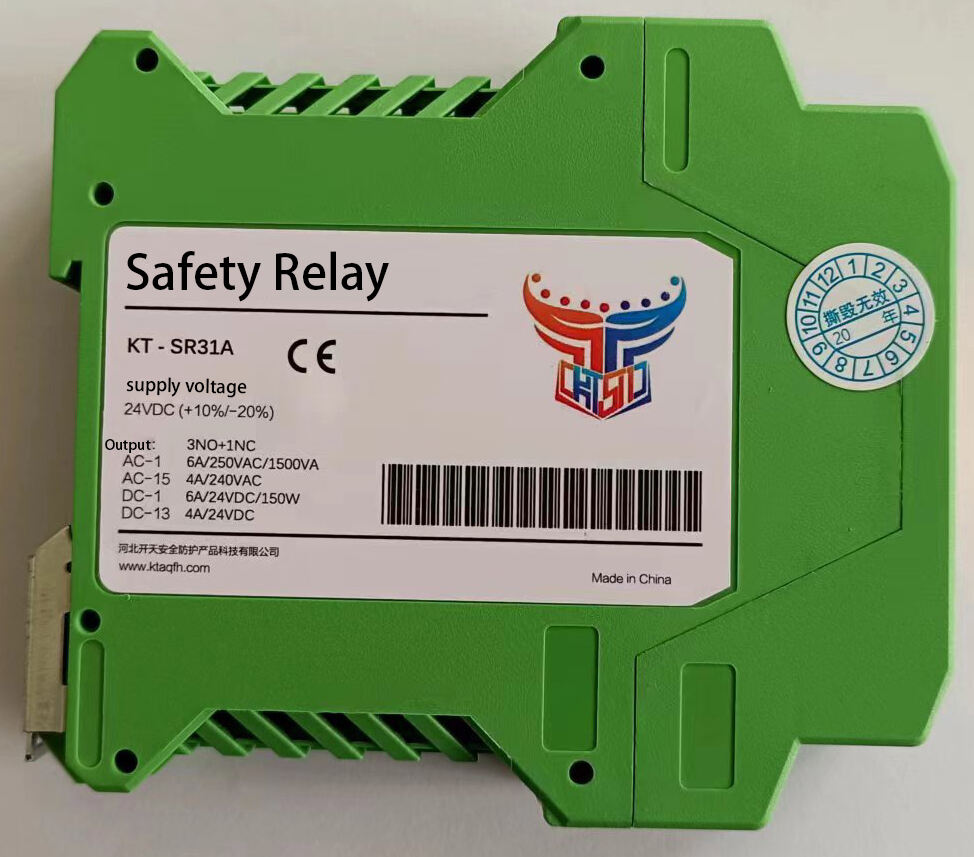
In today's industrial automation landscape, selecting the appropriate safety relay is critical for ensuring both operational efficiency and worker protection. A safety relay serves as the backbone of safety systems, monitoring and controlling safety devices while maintaining the highest levels of reliability. Understanding how to choose the right safety relay can significantly optimize your automation system's performance while meeting stringent safety requirements.
Understanding Safety Relay Fundamentals
Core Functions and Operating Principles
A safety relay operates on the principle of positive-guided contacts, ensuring that if one contact fails, the entire system fails in a safe state. This fundamental design philosophy makes safety relays different from standard control relays. The device continuously monitors input signals from safety devices such as emergency stops, light curtains, and safety gates, processing these signals according to predetermined logic functions.
The internal architecture of a safety relay includes multiple redundant channels that cross-monitor each other for faults. This redundancy ensures that single-point failures do not compromise the safety function. Modern safety relays incorporate advanced diagnostics that can detect internal faults, wiring errors, and external device malfunctions, providing comprehensive system monitoring capabilities.
Safety Category Classifications
Safety relays are classified according to international standards such as ISO 13849-1, which defines safety categories from B to 4. Category B represents basic safety requirements with minimal fault tolerance, while Category 4 provides the highest level of safety with dual-channel architecture and comprehensive fault detection. Understanding these categories is essential for selecting a safety relay that meets your specific application requirements.
Each safety category corresponds to different risk levels and required performance levels. Category 3 and 4 systems typically require safety relays with dual-channel inputs and outputs, cross-monitoring capabilities, and the ability to detect dangerous failures. The choice between categories depends on the risk assessment of your application and regulatory compliance requirements.
Key Selection Criteria for Optimal Performance
Input and Output Configuration Requirements
The number and type of inputs required directly influence safety relay selection. Consider whether you need to monitor emergency stops, enable switches, light curtains, or pressure-sensitive mats. Each safety device may require specific input configurations, and some safety relays offer flexible input options that can accommodate different device types within a single unit.
Output requirements are equally important, as they determine how many safety contactors, valves, or other actuators the safety relay can control. Some applications require immediate outputs for emergency shutdown, while others need delayed outputs for controlled system shutdown. The safety relay must provide sufficient output capacity and the appropriate timing characteristics for your specific application needs.
Voltage and Current Specifications
Proper voltage matching is crucial for reliable safety relay operation. Most industrial applications use 24VDC control voltage, but some require 115VAC or 230VAC configurations. The safety relay must be compatible with your system's control voltage to ensure proper operation and avoid compatibility issues. Consider voltage tolerance ranges and ensure the selected device can handle normal voltage fluctuations in your facility.
Current ratings for both inputs and outputs must align with your system requirements. Input current specifications determine compatibility with connected safety devices, while output current ratings affect the types and number of devices that can be controlled. Insufficient current capacity can lead to unreliable operation or device damage, making proper specification critical for long-term system reliability.
Advanced Features and Technology Integration
Diagnostic and Monitoring Capabilities
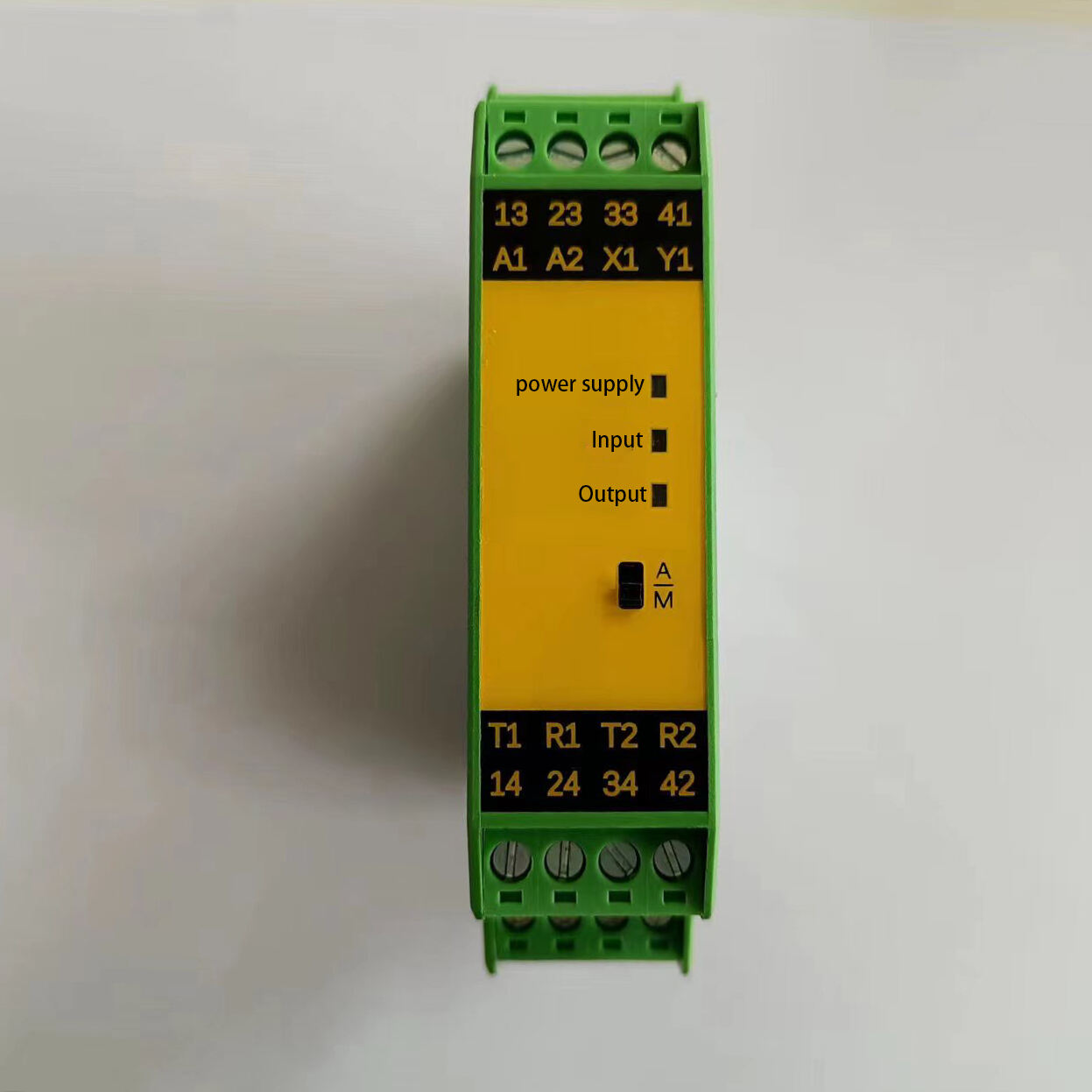
Modern safety relays offer extensive diagnostic features that enhance system reliability and maintenance efficiency. LED indicators provide immediate visual feedback on system status, input conditions, and fault states. Advanced models include digital displays that show detailed diagnostic information, making troubleshooting more efficient and reducing downtime during maintenance activities.
Communication capabilities enable integration with higher-level control systems and safety networks. Safety relays with fieldbus connectivity allow real-time monitoring of safety system status, remote diagnostics, and integration with plant-wide safety management systems. These features become increasingly important in Industry 4.0 implementations where comprehensive data collection and analysis drive operational improvements.
Programmable Logic Functions
Configurable safety relays offer flexibility through programmable logic functions that can be customized for specific applications. These devices support various safety functions including emergency stop monitoring, two-hand control, muting sequences, and speed monitoring. The ability to configure logic functions reduces the need for multiple safety devices and simplifies system architecture.
Programming interfaces range from simple DIP switches to sophisticated software tools that allow complex logic implementation. Consider the complexity of your safety requirements and the expertise available for configuration when selecting between fixed-function and programmable safety relay options. Programmable devices offer greater flexibility but require proper configuration knowledge to ensure safe operation.
Installation and Integration Considerations
Mounting and Environmental Requirements
Physical installation requirements significantly impact safety relay selection, particularly in challenging industrial environments. DIN rail mounting is standard for most applications, but some environments require NEMA-rated enclosures for protection against dust, moisture, and temperature extremes. Consider the operating temperature range, humidity tolerance, and vibration resistance required for your specific installation location.
Space constraints within control panels often influence device selection. Compact safety relays minimize panel space requirements while maintaining full functionality. However, ensure adequate clearance for wiring access and heat dissipation. Some safety relays offer modular expansion capabilities, allowing system growth without complete replacement of existing devices.
Wiring and Connection Methods
Connection methods vary from traditional screw terminals to spring-cage terminals and plug-in connectors. Spring-cage terminals offer vibration resistance and faster installation, while screw terminals provide secure connections for high-current applications. Consider maintenance practices and technician preferences when selecting connection types, as these factors affect long-term reliability and service efficiency.
Wire gauge compatibility ensures proper connections without voltage drop or overheating issues. Safety relay terminals must accommodate the wire sizes used in your installation while providing secure connections. Some devices offer multiple wire insertion options or removable terminal blocks that simplify maintenance and system modifications.
Cost-Benefit Analysis and ROI Considerations
Initial Investment vs Long-Term Value
While safety relay initial cost is important, the total cost of ownership includes installation, maintenance, and potential downtime costs. Higher-quality safety relays may have greater upfront costs but offer superior reliability, extended service life, and reduced maintenance requirements. Consider the cost implications of system failures, including production losses, regulatory fines, and potential safety incidents.
Advanced diagnostic features may justify higher initial costs through reduced troubleshooting time and predictive maintenance capabilities. Safety relays with comprehensive monitoring can identify potential issues before they cause system failures, allowing planned maintenance during scheduled downtime rather than emergency repairs during production periods.
Scalability and Future Expansion
System scalability affects long-term value and should influence initial safety relay selection. Modular safety relay systems allow expansion as production requirements grow, protecting initial investments while accommodating future needs. Consider whether the selected safety relay family offers compatible expansion modules and upgraded versions that maintain configuration compatibility.
Technology evolution in safety systems continues advancing, with newer safety relays offering enhanced features and improved performance. Selecting safety relays from manufacturers with strong development programs and backward compatibility commitments helps protect against technology obsolescence and ensures long-term support availability.
FAQ
What is the difference between a safety relay and a standard control relay
Safety relays incorporate positive-guided contacts and redundant monitoring circuits that ensure the device fails in a safe state if any component malfunctions. Standard control relays lack these safety features and cannot provide the fault detection and safe-failure characteristics required for safety applications. Safety relays also meet specific safety standards and certifications that standard relays do not address.
How do I determine the required safety category for my application
Safety category selection depends on risk assessment results that consider the severity of potential harm, frequency of exposure, and possibility of avoiding hazards. ISO 13849-1 provides guidance for conducting risk assessments and determining required Performance Levels. Consult with safety engineers and review applicable regulations to ensure proper category selection for your specific application and jurisdiction.
Can multiple safety devices be connected to a single safety relay
Yes, most safety relays can monitor multiple safety devices simultaneously, but the configuration depends on the specific devices and safety requirements. Series connections work for emergency stops and enable switches, while parallel connections may be appropriate for certain applications. However, each configuration must maintain the required safety integrity level and consider the impact of individual device failures on overall system safety.
What maintenance is required for safety relay systems
Safety relay maintenance includes regular functional testing of connected safety devices, verification of wiring integrity, and documentation of test results. Many safety standards require periodic proof testing to verify continued safety function performance. Modern safety relays with diagnostic capabilities can indicate when maintenance is needed and provide test documentation features that simplify compliance with safety regulations and audit requirements.